
Full Story
Most people who visit a Sri Lankan national park care deeply about wildlife. Yet in busy parks you can still see jeeps racing each other to a leopard sighting, engines revving next to a nervous elephant, or a crowd of vehicles boxing in a cat so it cannot cross the road. It rarely happens because visitors want it. It happens because drivers think that is what visitors want.
Knowing the rules, and saying clearly what kind of safari you want, changes that.
The official park rules
Sri Lanka's national parks are managed by the Department of Wildlife Conservation, and the main rules are straightforward:
- Stay in the vehicle at all times, except at designated rest points.
- Stay on the tracks. Off-road driving is not allowed.
- Respect the speed limit inside the park, which is low. Speeding is one of the main causes of disturbance and roadkill.
- Do not feed any animal.
- Do not litter. Polythene and plastic are a particular problem, and many parks discourage or ban them.
- No loud music, shouting or horns.
- Leave by closing time, usually around 6:00 pm.
- No drones without special permission.
- Do not remove plants, rocks, bones, feathers or anything else.
Breaking the rules can lead to fines for the driver and, in serious cases, a ban from the park.
Leopard sightings: the biggest problem
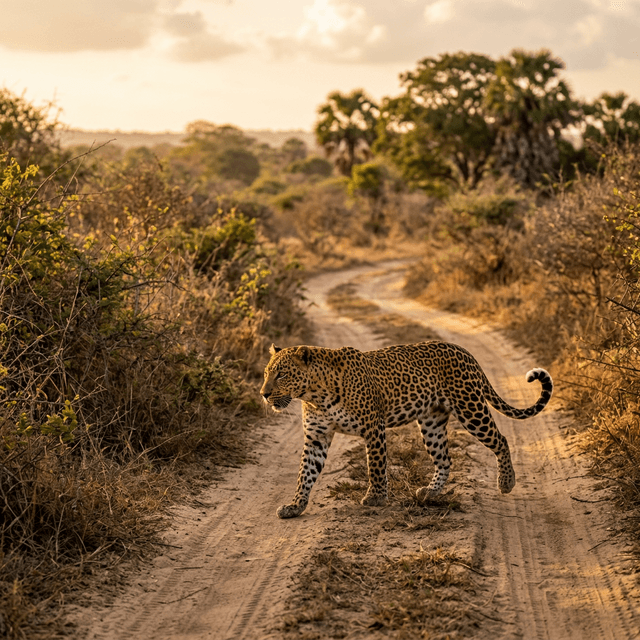
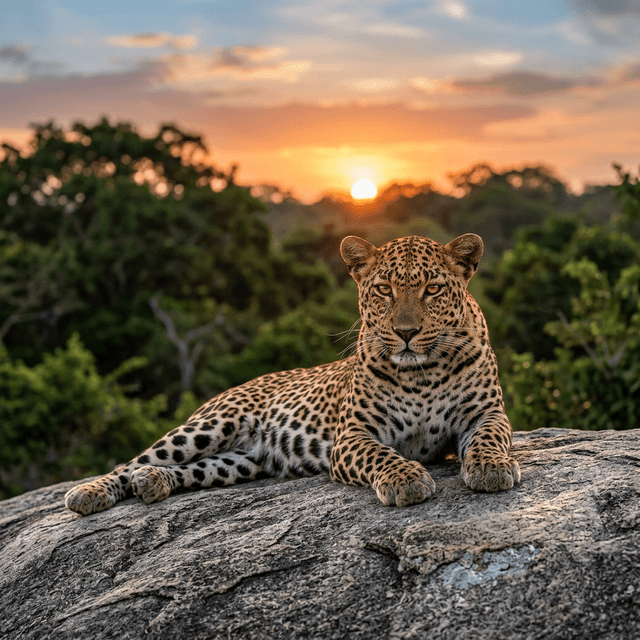
In Yala especially, news of a leopard spreads instantly between drivers. Within minutes, dozens of jeeps can arrive and jostle for the best position. Leopards have been blocked from crossing tracks, separated from cubs and pushed off kills. This is the single biggest welfare issue on Sri Lankan safaris.
What you can do:
- Tell your driver at the start that you do not want to race to sightings.
- If a sighting is crowded, watch from further back or move on. Leopards often reappear when the jeeps leave.
- Never encourage your driver to pull forward, block another jeep or get between the cat and where it is going.
- Keep quiet. Excited shouting carries.
See our leopard spotting guide for calmer ways to find cats.
Elephants: give them space
- Keep a good distance, at least 25 to 30 metres, and more from mothers with young calves.
- Watch for signs of stress: ears spread wide, head raised, trunk swinging, a mock charge. If you see them, your driver should back away calmly.
- Be extra careful with bulls in musth, recognisable by a dark discharge running down the side of the face. They can be unpredictable.
- Never feed elephants at park fences or roadsides. It causes accidents and turns elephants into roadside beggars.
Quiet makes a better safari
Silence is not just polite. It also helps you see more. Animals relax when they are not disturbed, and your tracker can hear alarm calls. Turn off the engine when watching, put phones on silent and keep conversation low.
Photography etiquette
- No flash. It startles animals and rarely improves a wildlife photo.
- Do not ask the driver to reposition again and again for a better angle.
- Share good viewing spots with others in the jeep.
- Do not use calls, sounds or bait to attract animals.
Our photography tips cover the technical side.
Litter and plastic
Bring a reusable water bottle and a bag for your rubbish. Many park animals, from monkeys to elephants, will eat plastic, which can kill them. Leave nothing behind, including food scraps, which encourage animals to approach vehicles.
Respecting people too
- Your driver is working long hours in tough conditions. A thank you and a tip for a good drive go a long way.
- Communities around the parks live with wildlife every day, including crop raids and danger from elephants. Choose local guides and lodges where you can.
- Dress modestly and remove shoes at temples near the parks, such as Sithulpawwa and Kataragama.
What responsible operators do
- Keep to speed limits and tracks.
- Avoid crowding sightings and leave space for animals to move.
- Brief guests on behaviour before entering the park.
- Do not promise guaranteed sightings.
- Avoid plastic and take rubbish out.
When booking a safari, it is worth asking operators how they approach these issues.
Avoid captive wildlife attractions
Seeing elephants in the wild is so easy in Sri Lanka that there is no need for elephant rides, elephant bathing or shows. Many of these involve harsh training and chains. If you want to see young elephants up close, the Elephant Transit Home at Udawalawe is run for rehabilitation and release.