Sri Lankan Leopard at a Glance
What is a Sri Lankan Leopard?
The Sri Lankan leopard is the leopard subspecies Panthera pardus kotiya. It is endemic to Sri Lanka, meaning its natural wild range is limited to the island.
Leopards are the largest of Sri Lanka’s wild cats. Their spotted coats provide camouflage across varied environments, while the pattern of spots and rosettes can also help researchers distinguish individual animals.
Sri Lankan leopards are not a separate leopard species. They belong to Panthera pardus, with kotiya identifying the Sri Lankan subspecies.
What Does a Sri Lankan Leopard Look Like?
Sri Lankan leopards have the familiar spotted and rosetted coat associated with leopards, generally set against a yellowish to rusty-gold background. Individual coat patterns vary, which is one reason photographs can be useful when researchers identify and monitor particular animals.
Adult males are generally larger than females, but do not add a simplified “average size” or weight range unless the figure is supported by an approved scientific source and its context is clear.
A small number of Sri Lankan leopards have also been recorded with melanism, producing a much darker coat. These animals are commonly called black leopards or black panthers, but they are not a separate species.
Where Do Sri Lankan Leopards Live?
Sri Lankan leopards are not restricted to a single national park or one type of landscape. Research has documented the subspecies across environments that include dry and evergreen forests, wetter forest habitats, montane and sub-montane areas, and landscapes outside formally protected areas.
That broad distribution is important for travelers to understand. Yala and Wilpattu are strongly associated with leopard safaris, but the Sri Lankan leopard’s range extends beyond the boundaries of those parks.
Recent research in Sri Lanka’s Central Highlands has also documented leopards using human-dominated agricultural landscapes, highlighting the importance of understanding leopard conservation beyond protected areas alone.
Arid & Dry Evergreen Forests
Yala, Wilpattu & Southeastern Scrublands
Wet & Lowland Rainforests
Sinharaja & Surrounding Rainforest Corridors
Montane & Cloud Forests
Central Highlands & Horton Plains Plateau
Human-Dominated Agricultural Landscapes
Highland Tea Country & Forest Margins
Sri Lankan Leopard Habitat
One of the notable characteristics of the Sri Lankan leopard is its ability to use varied habitats.
Scientific literature records the subspecies in montane and sub-montane environments as well as tropical rain forest, monsoonal dry evergreen forest and arid-zone scrub.
Different habitats create very different wildlife experiences. A leopard moving through the dry landscapes associated with Yala can be considerably easier for a visitor to observe than an animal moving through dense vegetation elsewhere. That difference should not be interpreted as evidence that leopards occur only where tourists frequently see them.
Where Can Travelers See Leopards in Sri Lanka?
Wildlife sightings can never be guaranteed, but several protected areas are strongly associated with leopard watching in Sri Lanka.
Yala National Park
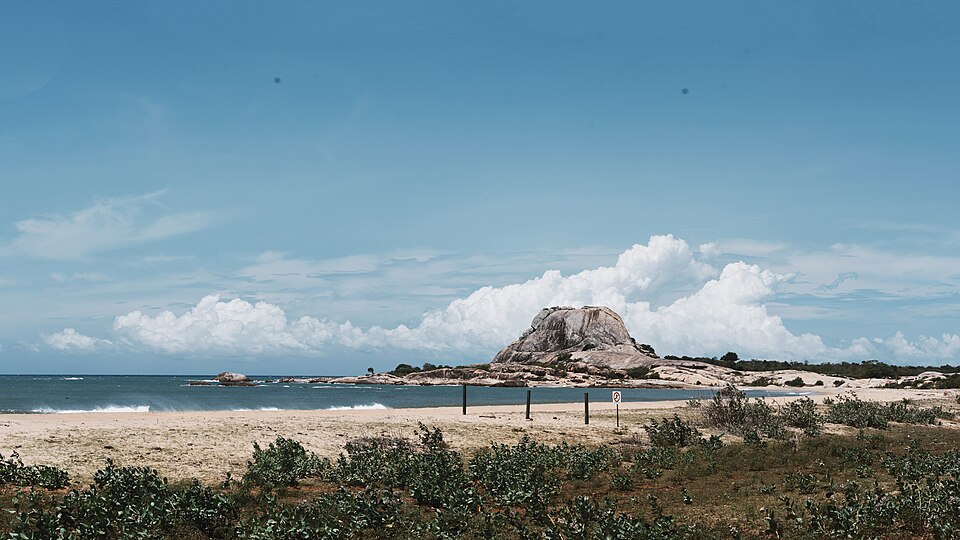
Yala National Park is one of Sri Lanka’s most widely known safari destinations and an important location for leopard research and observation.
A study focused on Yala National Park Block I identified a minimum of 77 individual leopards as of 31 March 2021 within that specific study context. This figure must not be presented as the population of Yala National Park as a whole or as a current national population estimate.
For travelers, Yala combines the possibility of leopard sightings with a broader safari experience that can include elephants, other mammals, birds and varied dry-zone landscapes.
Wilpattu National Park
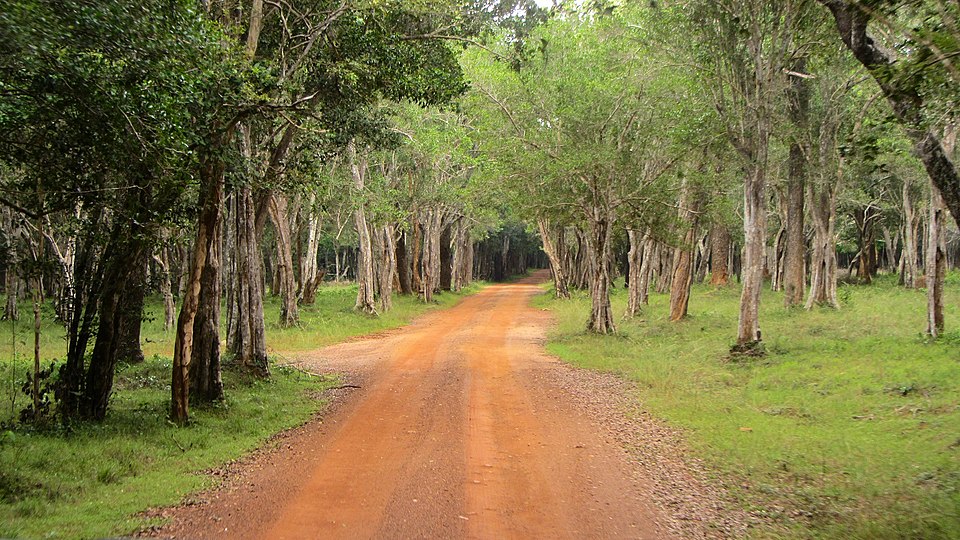
Wilpattu National Park is another important destination for travelers interested in Sri Lankan leopards. Its landscape is known for forest, open areas and natural villu wetlands, creating a different safari environment from Yala.
Leopards occur in Wilpattu, but do not publish a definitive park-wide population number unless supported by a current authoritative park-wide estimate.
Seeing a leopard is never guaranteed. These are free-ranging wild animals, and sightings depend on animal movement, habitat, weather, visibility and other conditions on the day of the safari.
What Do Sri Lankan Leopards Eat?
Sri Lankan leopards prey on a range of animals, and diet varies with habitat and prey availability.
Recent research from a human-dominated agricultural landscape in Sri Lanka’s Central Highlands identified 17 prey species in analysed leopard scat samples. Wild prey made up the large majority of the recorded diet in that study, while domestic species accounted for less than 15%.
This finding belongs to that particular study landscape and should not be presented as a universal diet percentage for every Sri Lankan leopard population.
How Many Leopards Are in Sri Lanka?
There is no single population figure on this page that we present as a definitive current count of every leopard in Sri Lanka.
Researchers can estimate density, identify individuals and study populations within defined areas, but those findings should not automatically be extrapolated to the entire island.
For example, research in Yala National Park Block I has identified individual leopards within a specific study area and period. That does not mean the result represents Sri Lanka’s total leopard population.
For a closer look at what population studies can and cannot tell us, read our dedicated guide.
The Black Leopard of Sri Lanka
“Black leopard” and “black panther” are commonly used names for melanistic leopards. Melanism produces unusually dark pigmentation, but the animal remains a leopard rather than becoming a separate species.
Genomic research on melanistic Sri Lankan leopards has investigated the genetic basis of this darker coat.
Sri Lankan Leopard Conservation
Protecting the Sri Lankan leopard involves more than protecting the animals seen by visitors inside national parks.
Research shows that leopards also use landscapes outside protected areas. Where large carnivores and people share landscapes, conservation therefore depends on habitat, connectivity, prey, human behaviour and reducing harmful interactions between people and wildlife.
Because the Sri Lankan leopard exists naturally only in Sri Lanka, its long-term conservation depends on what happens on this island.
Responsible Leopard Watching
A good leopard safari respects the animal first.
Keep a reasonable distance, follow park and guide instructions, avoid pressuring drivers to chase wildlife, and never expect an animal to remain visible for photographs.
Crowding or pursuing a leopard can change the experience for both the animal and other visitors.
Wildlife sightings are unpredictable. Choose a safari for the opportunity to experience the ecosystem as a whole, rather than treating a leopard sighting as something that can be guaranteed.
Plan a Sri Lanka Leopard Safari
If seeing a Sri Lankan leopard is high on your travel wish list, the choice of national park should be considered as part of your wider Sri Lanka itinerary.
Yala and Wilpattu offer different landscapes and safari experiences, and the right choice can depend on your route, travel dates and the kind of wildlife experience you prefer.
Welcome Sri Lanka can help you connect a safari with the rest of your journey rather than planning it as an isolated stop.
Continue Exploring Sri Lanka’s Leopards
Black Leopards in Sri Lanka
Examine records and research on rare melanistic leopards across the island.
Sri Lankan Leopard Population
Understand what camera-trap surveys and field research reveal about leopard numbers.
Are There Tigers in Sri Lanka?
Investigate historical ecology, biogeography, and fossil records in Sri Lanka.